Compare conditions and scope, not totals alone
How to Compare Cold Storage Refrigeration Proposals
Use a like-for-like proposal comparison: align the design conditions, room and product duties, equipment and auxiliary scope, local installation work, controls, commissioning, training and exclusions before comparing price.
- Duty
- Defines the case
- Safety
- Needs local review
- Service
- Part of feasibility
01
Align the design conditions first
Ask each proposer to state the product, room temperatures, daily intake or throughput, operating schedule, ambient or heat-rejection conditions and load basis used for the configuration. Two proposals cannot be compared fairly if one covers chilled storage while another includes freezing, or if their product and operating assumptions differ.
Where calculations or design sheets are available, check the units, conditions and boundary of each value. Storage inventory, refrigeration load, energy use and freezer throughput describe different things and should not be used interchangeably.
02
Compare equipment and auxiliary scope
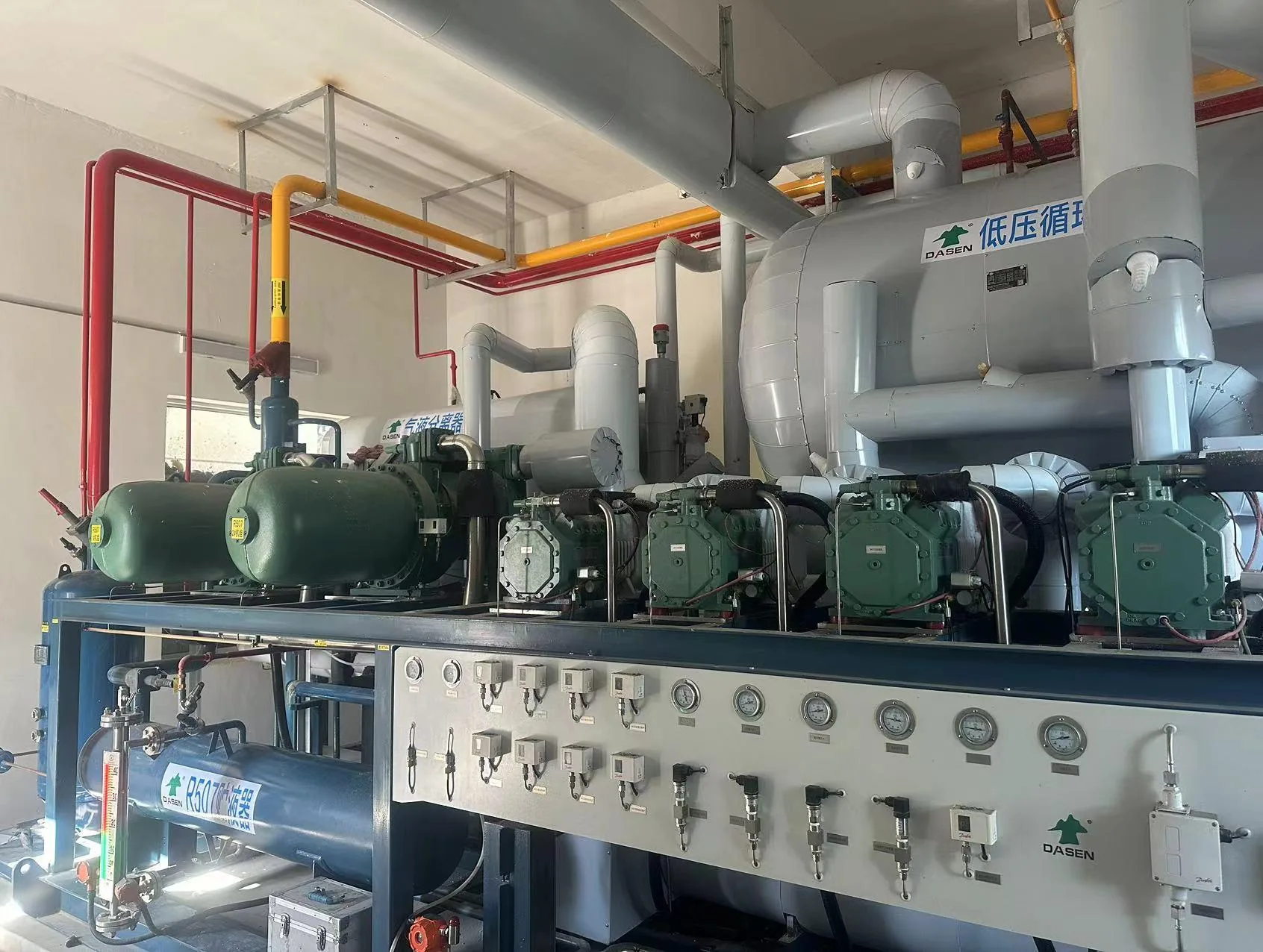
List compressor packages, condensers, air coolers, controls, valves, vessels, oil-management components where applicable, insulation interfaces, doors and spares. Compare the equipment list alongside the system conditions rather than using a product name as evidence that two systems are equivalent.
Also check what is supplied for controls: sensors, point lists, alarms, panels, network interface, user access and the response process. A proposal with a different controls boundary may have a different equipment and commissioning requirement.
03
Separate installation from local engineering work
Ask who supplies pipework, labour, lifting, electrical connection, water, drainage, civil works, permits, fire-system coordination, insulation, site safety and local certification. These activities may be divided across several parties, but each needs a named owner and a clear interface.
For an upgrade, compare the survey allowance, shutdown assumptions, temporary capacity, product protection, isolation sequence and controls integration. These items can matter as much as the replacement machinery in an operating facility.
04
Check commissioning, acceptance and exclusions
A complete comparison identifies site-readiness requirements, commissioning attendance, agreed test scope, documents, training, handover records and open-item ownership. It should also list what must be provided by the client or local contractor before start-up.
Read exclusions as carefully as inclusions. Freight, customs, local taxes, building work, electrical power, water, drainage, lifting, installation labour, permits, spare parts and ongoing service can be handled differently in each proposal.
| Comparison item | What to ask | Why it matters |
|---|---|---|
| Design conditions | Which product, room, ambient, duty and schedule assumptions were used? | Shows whether the proposals address the same operating requirement |
| Equipment and auxiliaries | Which packages, terminals, controls, valves, instruments and accessories are included? | Reveals differences in the technical supply boundary |
| Installation and local work | Who provides piping, labour, power, drainage, lifting, permits and certification? | Separates equipment supply from site execution |
| Controls, spares and training | What points, alarms, documentation, spare parts and training are included? | Clarifies operating and handover support |
| Acceptance and exclusions | What tests, readiness conditions, exclusions and responsibilities apply? | Prevents an apparent total from hiding essential work |
Questions to discuss
Frequently asked questions
Which system is most efficient?
This guide does not make a universal efficiency claim. Results depend on design conditions, operating profile, controls, maintenance and the actual system boundary.
Can the same refrigerant be used in different architectures?
Architecture and refrigerant strategy are related but distinct decisions. The specific configuration must be reviewed against conditions and safety requirements.
A clear next step
Tell us what you need to store, cool or freeze.
Use the Project Brief Builder to capture the available product, condition, room, throughput and scope information.