A configuration question, not a default claim
CO2 Refrigeration Systems for Industrial Cold Storage
CO2 can appear in different industrial refrigeration architectures. The right review begins with operating conditions, pressure and safety design, local service capability and the specific system boundary.
- Architecture
- Cascade / secondary / transcritical
- Condition
- Site and duty specific
- Decision
- Engineering review
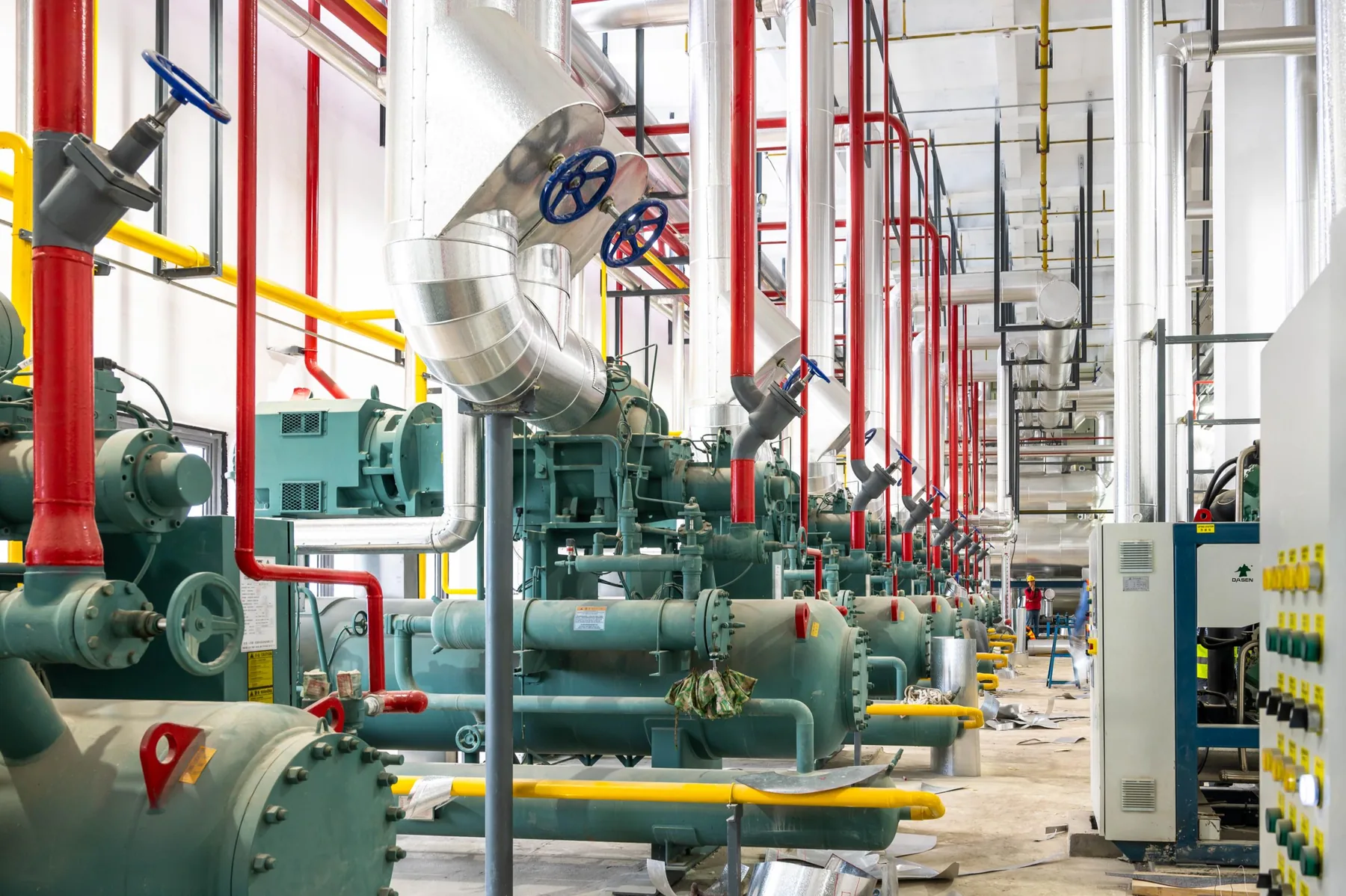
01
Name the architecture before discussing suitability
CO2 may be used in a cascade arrangement, as a secondary refrigerant, in a transcritical system or in other project-specific combinations. These descriptions are not interchangeable. Each route has different pressure, heat-rejection, controls, safety, equipment and service considerations. A project conversation should identify the architecture actually under review rather than using CO2 as a single generic product label.
Illustrative configuration examples can demonstrate that particular configurations have existed in particular contexts. They do not establish that every architecture is suitable for every country, ambient condition, facility or new project.
02
Review operating and local conditions
Ambient conditions, product duty, facility scale, plant-room layout, safety assessment, local standards, maintenance familiarity, component availability and emergency response arrangements can all shape the feasibility of a CO2 configuration. These factors deserve early discussion because they affect not only equipment selection but also installation, commissioning and operation.
A proposal should make the selected system boundary clear. For example, it should distinguish the low-temperature stage, high-temperature stage, secondary loop, terminals, heat rejection and controls rather than presenting a headline refrigerant label as the whole design.
03
Keep claims within the evidence
This page intentionally does not claim a single CO2 architecture, capacity range, energy result or global delivery capability. Any technical configuration should be confirmed against source data, project conditions and the actual parties who will design, supply, install and maintain it.
| Topic | Question | Why it matters |
|---|---|---|
| Architecture | Is the concept cascade, secondary, transcritical or another arrangement? | The equipment and operating conditions differ. |
| Ambient and rejection | What site ambient and heat-rejection constraints apply? | Affects operating strategy and component selection. |
| Safety | What pressure, detection, ventilation and code requirements apply? | Must be assessed in the real jurisdiction and facility. |
| Service | Who can commission and maintain the selected system locally? | Influences support and lifecycle risk. |
| Scope | Which party owns engineering and local execution? | Prevents a refrigerant concept being mistaken for delivery responsibility. |
Questions to discuss
Frequently asked questions
Is CO2 automatically the best environmental option?
No universal conclusion is made here. The project must consider the full system architecture, conditions, safety, energy operation, service capability and applicable requirements.
Does an illustrative CO2 project prove availability for my location?
No. A documented example only supports discussion of that specific context. Availability and suitability require current project review.
A clear next step
Tell us what you need to store, cool or freeze.
Use the Project Brief Builder to capture the available product, condition, room, throughput and scope information.